
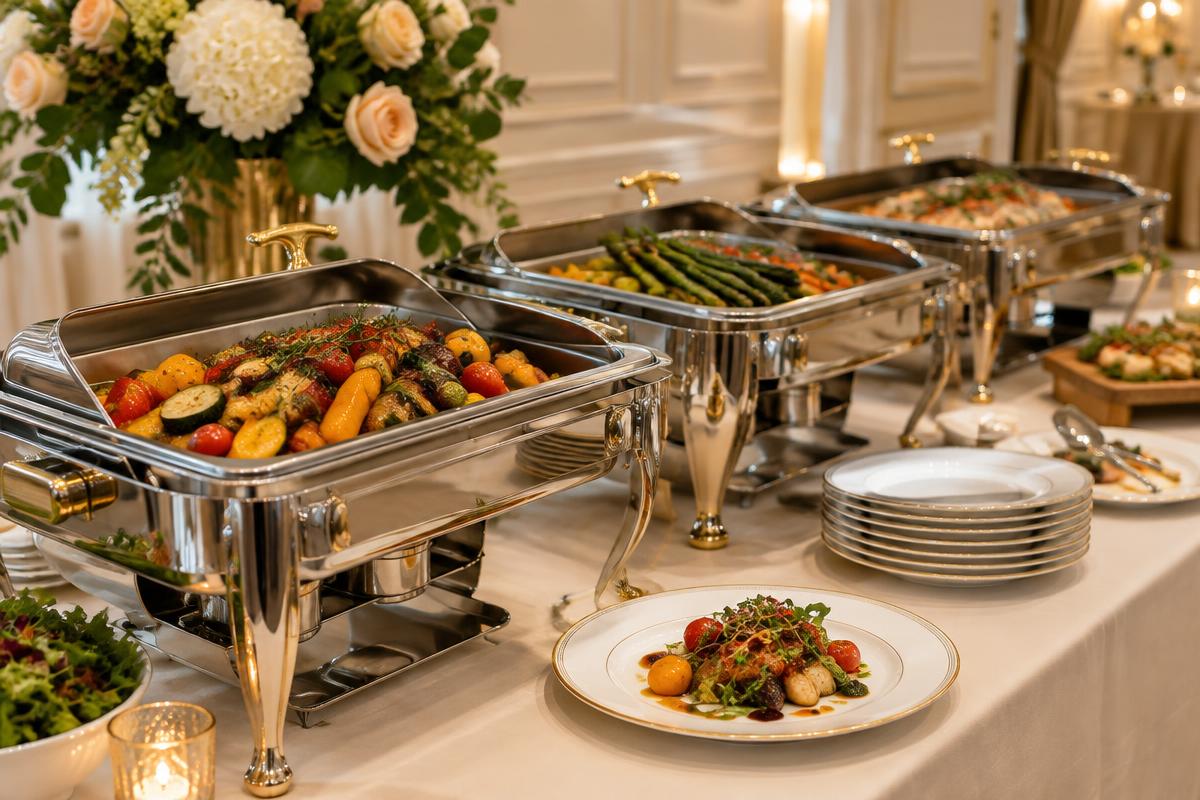
Choose a service style that works for your event
The right format depends on how you want guests to spend their time. A buffet can offer flexibility, but needs an appropriate serving area and a plan for guest movement. Seated dining gives the meal a defined place in the programme and requires attention to table arrangements and service timings. Reception-style catering may suit occasions where people are mingling rather than sitting down together.
These are options to enquire about, not a published menu or a guarantee of provision. Describe the occasion, the desired atmosphere and the venue’s facilities so that suitable arrangements can be discussed. An approximate guest count and a budget range help frame the conversation without requiring every detail to be settled at the outset.
Coordinate food with the schedule and the venue
Catering needs enough time and space to be prepared, served and cleared. Share the event programme, the guest arrival pattern and any periods when service must pause for speeches or presentations. Ask the venue about access, food preparation facilities, serving areas and any rules that affect outside catering. These details should be established rather than assumed.
The schedule also needs to account for suppliers arriving, staff preparing the room and the event space becoming ready for guests. If catering is part of a wider event management brief, the requirements can be discussed together. Where you retain responsibility for the venue or other suppliers, clarify the information and decisions each contact needs.
Discuss dietary requirements and allergens early
Food preferences, dietary requirements and allergen concerns are important parts of the brief. Gather guest information in advance and agree how it will be passed to the catering contact. Ask what can be accommodated, how dishes will be identified and who will answer questions during service. Menus and arrangements must be confirmed before guests rely on them.
We do not advertise an allergen-free environment or publish unverified food hygiene ratings. A dietary request should never be treated as an automatic guarantee. Where a guest has a particular concern, encourage a direct discussion of the proposed arrangements so the people responsible can explain suitability and limitations clearly.
Prepare the details for a useful catering enquiry
Include the event date, venue or preferred area, approximate numbers and the style of service you have in mind. Add the proposed meal time, available facilities, known dietary needs and any existing catering restrictions. If you are unsure about the format, describe how the event will run and what you want guests to experience.
Catering and staffing requirements often connect, but neither should be assumed to include the other. Discuss waiting, front-of-house and clearing responsibilities as part of the scope. Our event staffing page explains how to brief people for a specific occasion. Hospitality employers looking for wider staffing support should explore recruitment instead. Availability and arrangements will be agreed following a conversation about your requirement.
Good to know.
Can I discuss buffet or seated dining arrangements?
Yes. Tell us your preferred style and event format. Suitable options, menus and the scope of provision need to be discussed and confirmed.
Do you publish sample menus or catering prices?
No. This website does not advertise menus or prices. Provide your event details and budget considerations for a tailored discussion.
Can dietary requirements be accommodated?
Raise each requirement early. Suitability and allergen arrangements must be specifically discussed and confirmed; an allergen-free environment is not promised.
Does catering include waiting staff?
Do not assume staffing is included. Explain the service required and confirm the agreed responsibilities for serving and clearing.
What should I check with my venue?
Ask about outside catering rules, preparation facilities, supplier access, serving space, timings and clearing arrangements.