
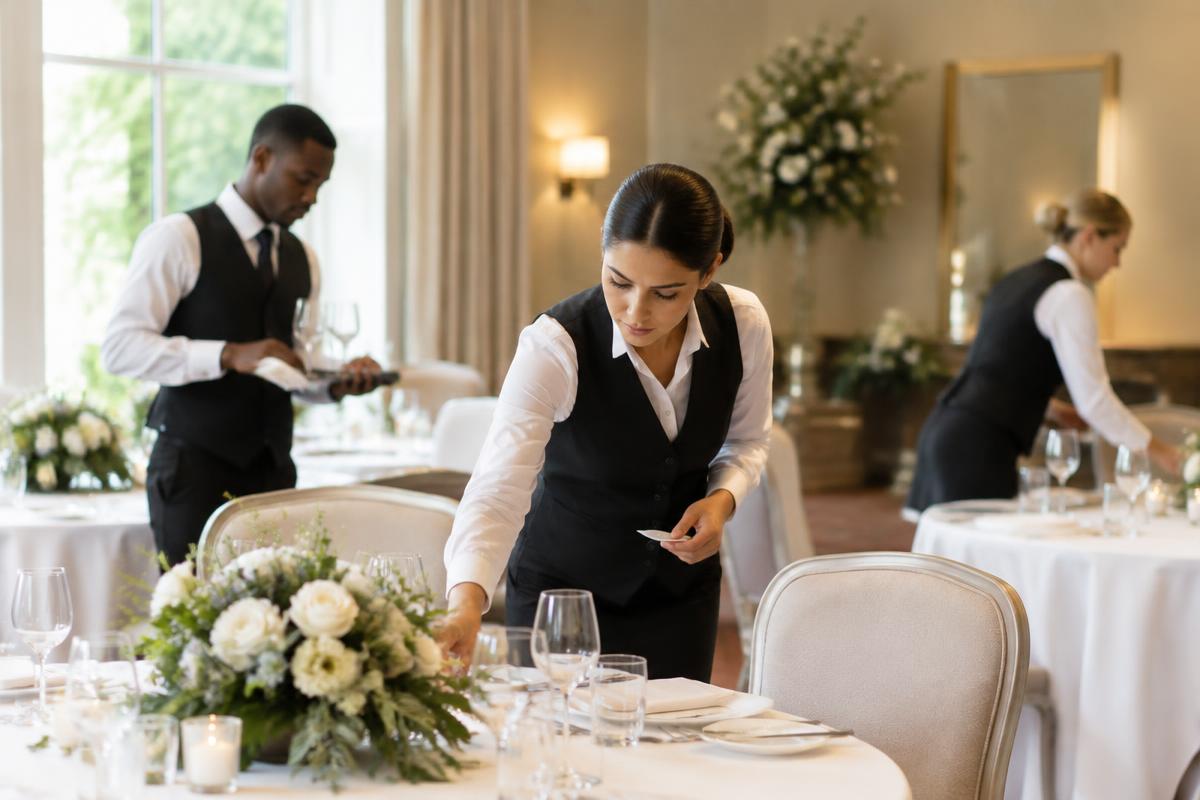
Build the staffing brief around the event
Start with the date, location and estimated attendance, then explain the programme. A reception, a seated meal and a conference registration period each place different demands on guest-facing support. Identify the moments when guests arrive, food is served or rooms change so the roles can be discussed in the context of the occasion.
Tell us what your venue and existing suppliers already provide. You may need additional waiting support, a defined welcome role or people helping with the organisation of the event space. Describe the actual tasks instead of assuming that a broad job title covers them all. Every proposed role and date is subject to a discussion of suitability and availability.
Think through shifts, access and preparation
The required start time may be earlier than guest arrival. Include time for a briefing, room familiarisation and any preparation within the agreed role. At the other end of the shift, explain whether the requirement includes service completion, guest departure or clearing tasks. Clarify breaks and the anticipated finish rather than leaving these as unstated assumptions.
Venue access and travel information also matter. Provide a postcode, the arrival entrance, reporting instructions and the appropriate contact. If the occasion has a tightly scheduled setup window, discuss how staffing arrival fits around suppliers and room readiness. For London events, loading and access arrangements should be established with the venue rather than inferred from its location.
Give guest-facing staff a clear point of reference
Presentation, service expectations and communication should be included in the brief. Explain dress requirements, the guest profile and who will allocate work during the event. If tasks change at different stages of the programme, a concise running order can help everyone understand the sequence. Identify the person who can answer questions and authorise changes on the day.
Where food is involved, agree the relationship between catering contacts and waiting support. Staff need to know who can confirm dietary and allergen information; they should not be expected to improvise answers about food suitability. The division of responsibilities for serving, guest queries and clearing needs to be established before the occasion.
Discuss one element or combine it with a wider plan
You can enquire specifically about event staffing when your venue, programme and suppliers are already arranged. Share what is confirmed and where additional support is needed. If the broader schedule is still being developed, event management support can also be discussed to connect the roles with the rest of the occasion.
Our catering page covers the service-style and dietary questions that may shape your staffing requirement. Employers seeking wider hospitality recruitment should use the employer page instead, while candidates should register through Join Our Team. No enquiry confirms staff availability or a booking: the roles, timings, scope and practical arrangements need to be agreed directly.
Good to know.
What kinds of event-support roles can I discuss?
Front-of-house, waiting, hospitality and event-support requirements can be discussed. Availability and suitability are confirmed for each brief, not guaranteed for every role.
How many staff will my event need?
Guest numbers are only part of the picture. Share the service style, tasks, venue layout and timings so the requirement can be discussed.
Should shifts include preparation time?
Explain any briefing and preparation tasks and when the room must be ready. Start and finish times should reflect the agreed responsibilities.
Can staffing be arranged without full event management?
You can enquire about staffing as an individual requirement. Tell us who is managing the occasion and how staff will be briefed.
Who should apply if they want event work?
Prospective staff should use Join Our Team. Candidate interest is handled separately from client staffing enquiries.