A role brief is more useful than a job title alone
Two roles with the same title can involve very different work. Describe the tasks, the venue or business environment and the experience that matters for your requirement. Explain whether the work is guest-facing, how staff will interact with existing colleagues and what a successful shift looks like. This gives the conversation a more practical foundation than a title and headcount alone.
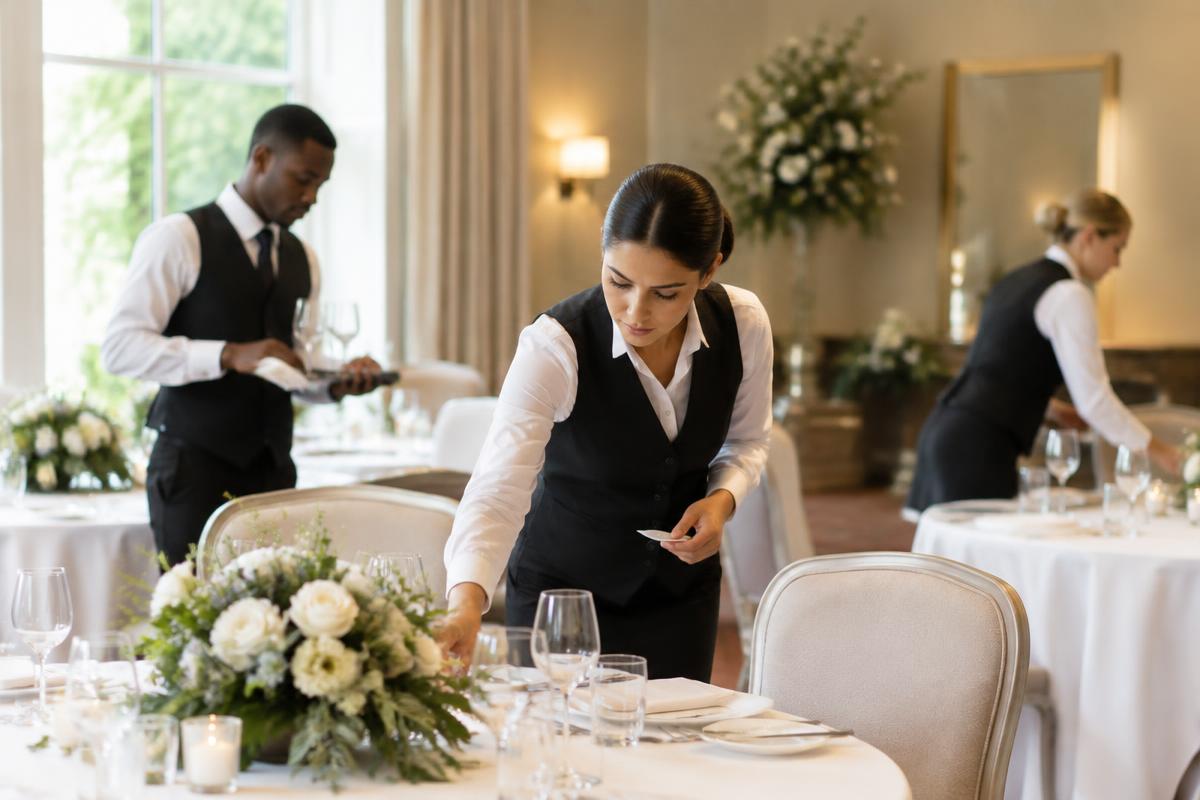
Venues, conference centres, catering companies and hospitality groups may each have different presentation and service expectations. Set these out clearly, including any dress requirements, briefing needs and role-specific responsibilities. If particular training or experience is essential, identify it in the brief so that suitability can be discussed rather than assumed.
Be clear about dates, shifts and working arrangements
Share the location, expected dates, shift lengths and start and finish times. Explain any patterns across the requirement, including periods of higher activity or changes in guest numbers. Availability needs to be considered against those details. Staffing travel and access requirements should be discussed early, particularly where public transport or late finishes may affect the arrangement.
This website does not promise permanent placements, payroll services or a particular employment model. The practical and contractual arrangements need to be clarified directly before a commitment is made. The same applies to checks and suitability requirements: tell us what your organisation needs and ask what can be confirmed for the proposed scope.
Match people to the environment they will join
Good preparation includes the information staff need before arrival. Identify the reporting contact, arrival instructions, service standards and how tasks will be allocated. Explain what your own team will manage and whether the requirement includes additional supervision or only people performing defined roles. A clear handover can help integrate support with your existing operation.
Do not assume that every requested role or date will be available. Provide as much relevant information as you can so that the requirement can be reviewed. If priorities change, communicate amendments to the tasks, schedule or numbers rather than relying on the original brief to cover different work.
Choose the right enquiry journey
Use the employer enquiry form when you are seeking people for a hospitality organisation or venue. Include your organisation, working location, roles, experience requirements, shift pattern and the help you are seeking. We can then discuss suitability, availability and the next information needed. An enquiry is a starting point and does not confirm a staffing arrangement.
If your requirement is for one particular occasion, our event staffing page is the more direct route. It focuses on an event date, guest numbers and a running order. People looking for work should use Join Our Team instead: that separate form records candidate interest without mixing it with client requirements or implying a job offer.
Good to know.
Is this page for employers or jobseekers?
This is the employer journey. People interested in hospitality and event work should register through Join Our Team.
Which details make a useful role brief?
Include tasks, location, experience requirements, dates, shift times, presentation expectations and the person staff will report to.
Are permanent placement or payroll services available?
Those services are not confirmed on this website. Discuss the working and contractual arrangements directly rather than assuming they are included.
Are checks or qualifications guaranteed?
No unverified checking standard is advertised. Explain any mandatory requirements and confirm what can be provided for the proposed arrangement.
How is this different from event staffing?
Recruitment addresses an employer’s hospitality staffing brief. Event staffing is framed around a specific occasion, its timetable and guest-facing roles.